Capstone: defend the DQ handover
Make an evidence-based design decision and carry open verification needs into IQ.
2.1 minutes · English captions · Illustrations and worked example
This lesson’s core explanations and worked-example reasoning are narrated. The table restates the example for reference; the practice activity and model answer are reading exercises.
English captions available.
Narration and visual explanations
Open View Technical Explanation to see each diagram, its text description and the matching narration. Standard abbreviations and numerals are used visually.
Counted does not mean suitable
View Technical Explanation · Diagram 1
Lesson explanation
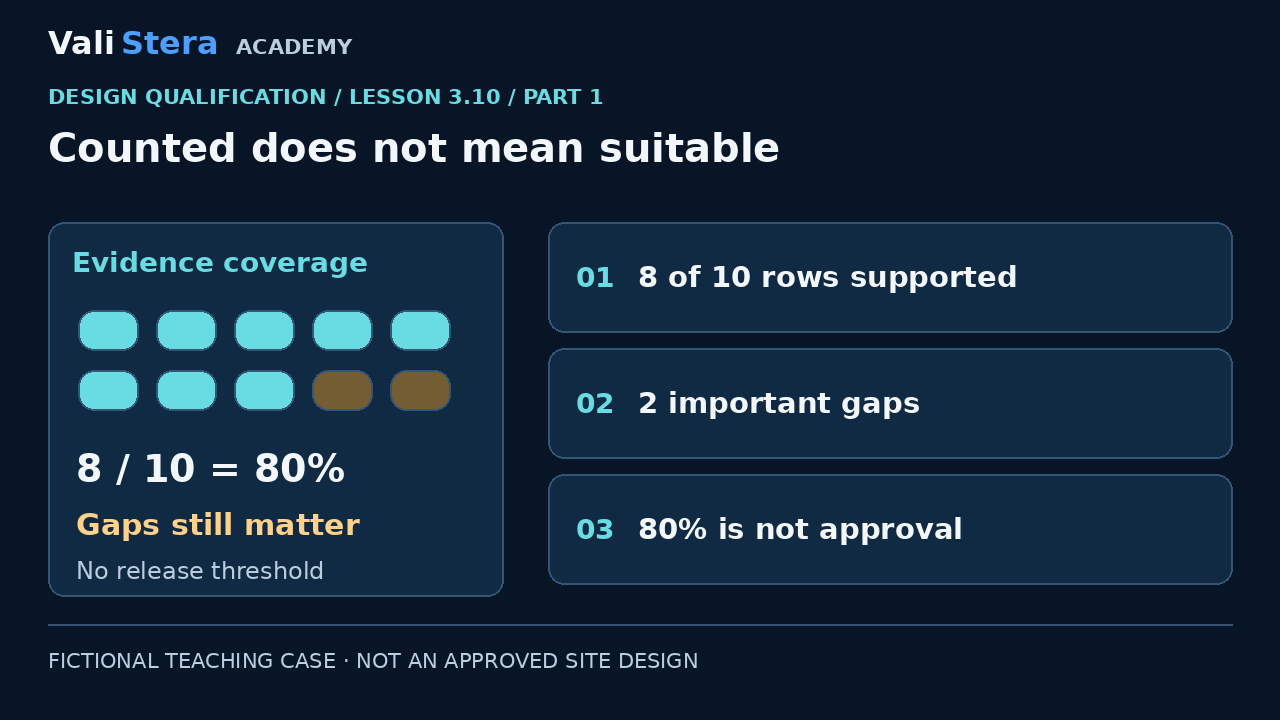
Our capstone has ten design requirements. Eight have adequate design evidence; two remain open. The arithmetic coverage is 80%, but there is no eighty-percent DQ acceptance threshold. The first gap concerns an unspecified contact gasket. The second concerns an unproven response to a shared sensor failure. The diagram deliberately puts the coverage bar beside the gaps. A high completion percentage does not remove the importance of what is missing.
Decide for a specific scope
View Technical Explanation · Diagram 2
Lesson explanation
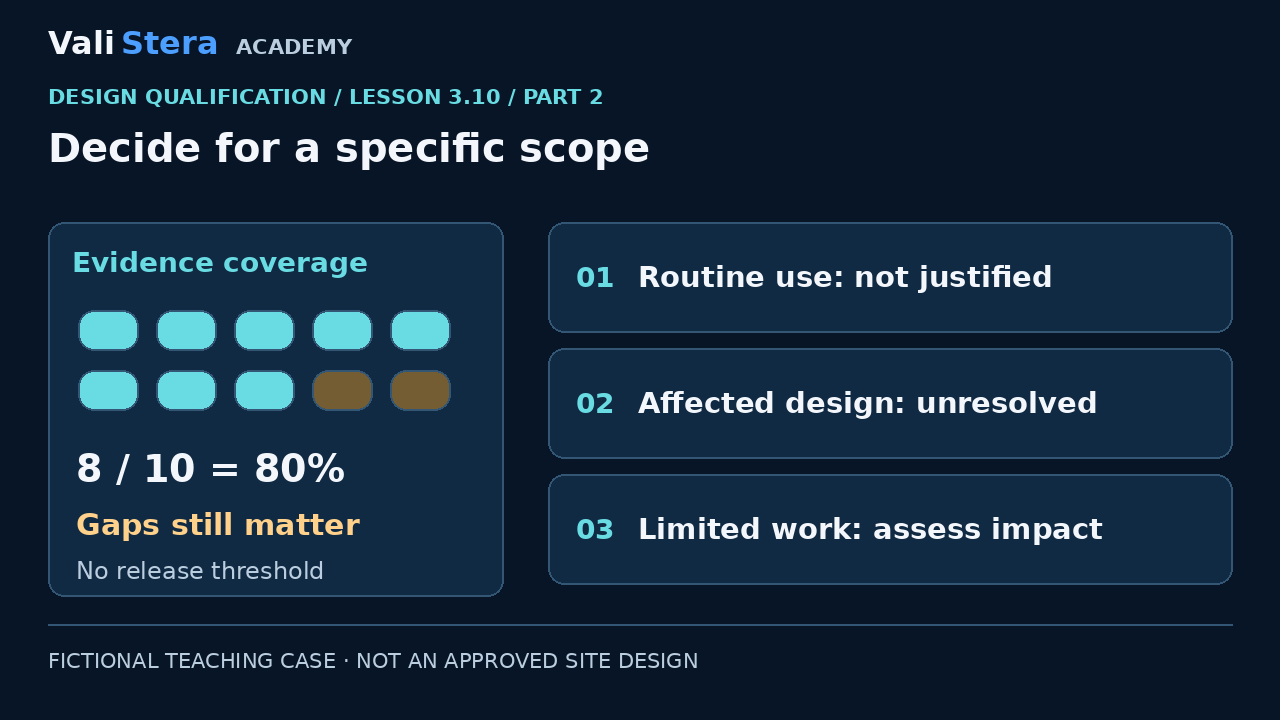
The supported conclusion is that this package does not justify routine use or a complete favourable design conclusion for the affected scope. Some limited work may continue only through the applicable documented assessment and authorization. Ask what activity is proposed and whether the gaps could affect it. Do not approve a blank category called conditional release. Name the activity, restrictions, responsible decision-maker and conditions that must be met first.
Prepare the IQ handover
View Technical Explanation · Diagram 3
Lesson explanation
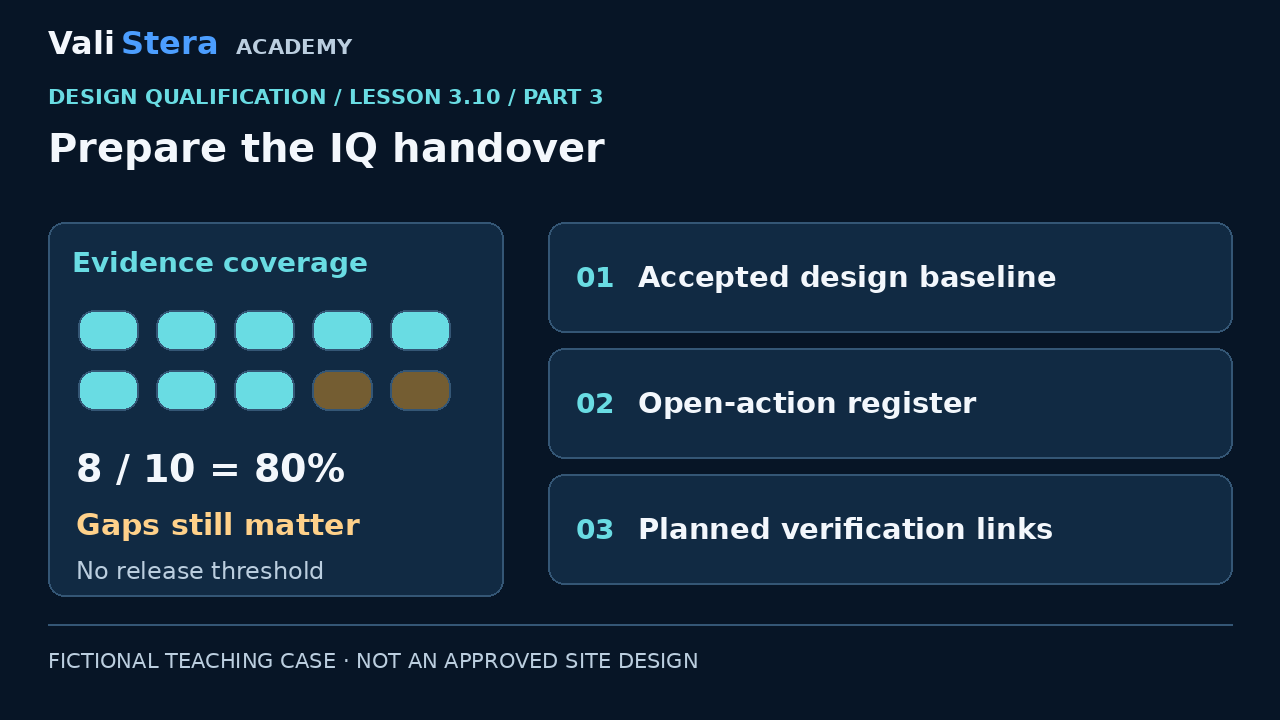
Prepare a handover containing the accepted design baseline, reviewed requirements, risk/control rationale, open-action register and planned verification links. Installation qualification will need the correct drawings, specifications and component identities. Unresolved design choices should not disappear into a signature page. Identify which installation activities depend on closing each gap. This creates a practical connection to Module 4 rather than implying that the next stage starts simply because this course has ended.
Defend the decision
View Technical Explanation · Diagram 4
Lesson explanation
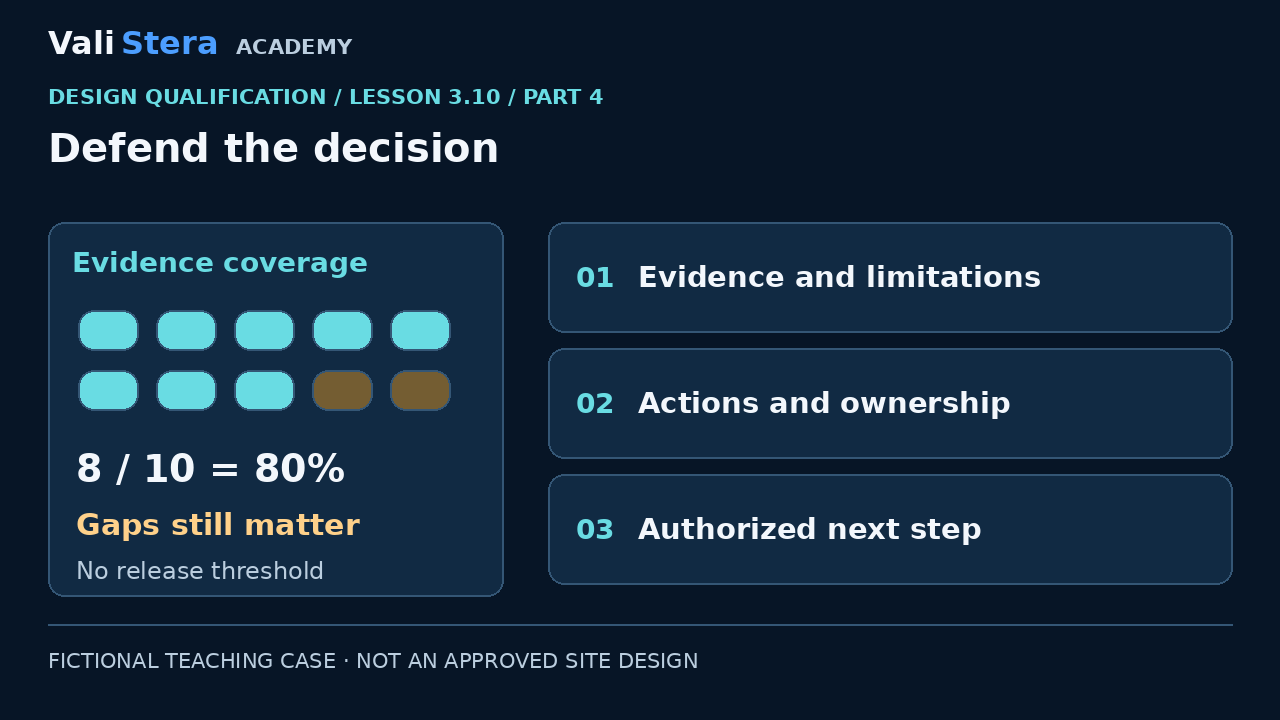
Your final task is to write a short decision memo. State what was reviewed, what the evidence supports, which important questions remain and what action is required. Explain why the completion percentage does not determine suitability. Compare your memo with the worked answer, then take the separate application assessment. Course completion is self-study evidence only. It does not replace supervised experience, an independent technical review or authorization to perform regulated work.
Worked example
| Decision memo item | Worked teaching answer |
|---|---|
| Scope | V-201 proposed design, baseline URS rev 3 / drawing B / risk record 2 |
| Finding | 8/10 rows supported; gasket basis and sensor-failure response unresolved |
| Conclusion | Complete favourable DQ conclusion and routine-use readiness not supported |
| Next activity | Assess any limited activity separately; document impact and authorization |
| Handover | Carry open actions and affected IQ/OQ dependencies with controlled documents |
Coverage is not acceptance
8 of 10 = 80% coverage. Review important gaps; no percentage authorizes use.
Apply it · Activity 10
Write a 150–250 word DQ decision memo for the eight-supported/two-open capstone. Distinguish routine use from one proposed limited next activity.
Open workbook activityCompare with model reasoning
Do not accept a complete favourable DQ conclusion while the gasket and sensor-response gaps are unresolved. Record scope and baseline, assign material/control actions, assess the specific proposed activity and keep IQ/OQ dependencies explicit. Eight of ten is 80% coverage, not a GMP acceptance criterion.